Extended invoicing - Setup
Use the Extended Invoicing app in Xena: grouped invoicing, extra details, sorting, order status and budget per task.
⚠️ Note: The Extended Invoicing app can be installed from the Xena App Store. This guide assumes that the app is already installed.
In this guide, selected features from the app are described, all of which can be found under the Invoicing tab:
Grouped invoicing
Extra details on invoice lines
Sorting of invoice lines
Prioritization of cost types
Order status when invoicing
Extended budget
For other features in the app, you can find the relevant guides via the links below:
➡️ Reusing invoice setups with invoice templates
Grouped invoicing
On the Invoicing tab, you can enable or disable Grouped invoicing. This setting determines how detailed the costs are displayed and transferred to the invoice lines.
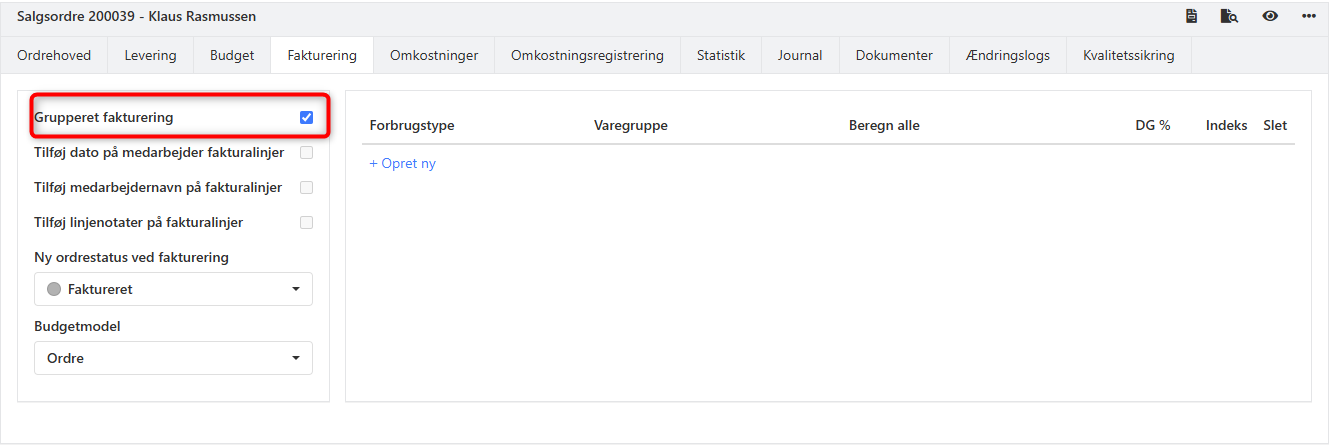
If you enable Grouped invoicing: The records on the Costs tab are grouped by article number and/or text. The invoice lines are transferred grouped, so the same article appears only once as a consolidated invoice line.

If you do not enable Grouped invoicing: The records are shown in detail on the Costs tab and are transferred line by line to the invoice lines without any consolidation. You can then also add extra details to the invoice lines, such as the registration date or a note. Read more in the next section.

Extra details on invoice lines
Under the Invoicing tab on sales orders, you can choose which extra details should be added to the invoice lines when they are transferred from the Costs tab. Note that this option is only available if you do not enable Grouped invoicing.
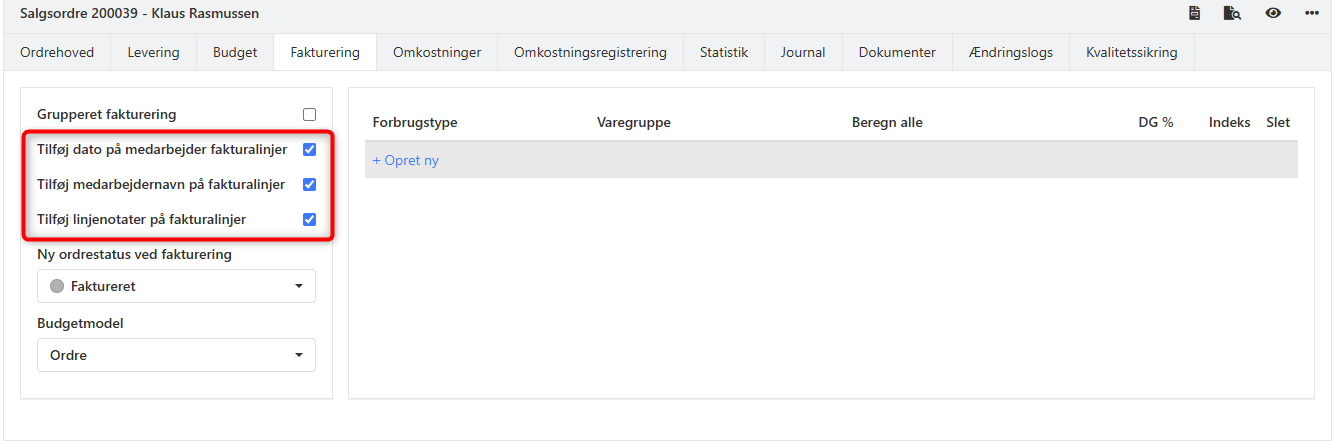
Here are examples of invoice lines with extra details added during the transfer:
Date added (on employee lines)
Employee name added (on employee lines)
Note added
Combination of the above
Note: It is not possible to change the order of the extra data on the invoice lines. The data is always displayed in the following order: Date - Description - Employee name - Note.

Sorting of invoice lines
Invoice lines are normally sorted by the index number you have entered on the cost types. With the Extended Invoicing app, you can override the usual sorting by entering a different number in the Index column on the Invoicing tab.
This controls the order of the records on the Costs tab and thereby also the order in which they are transferred to the invoice lines.
In this example, the cost type Ydelser is set to appear at the bottom of the invoice by giving it a higher index number.

If no other index is entered for the cost type on the order, the order set up under Setup > Order Setup > Cost Types is used.

Prioritization of cost types
In voucher registration, the cost types associated with the selected order under the Invoicing tab are listed at the top. In the following example, the cost type Varer 30 % is selected on the associated order, so it appears at the top of the list.

Order status when invoicing
On the Invoicing tab, you can select a suggested order status to be used when an invoice is created from a sales order. The selected order status is suggested automatically, but you can always choose a different status.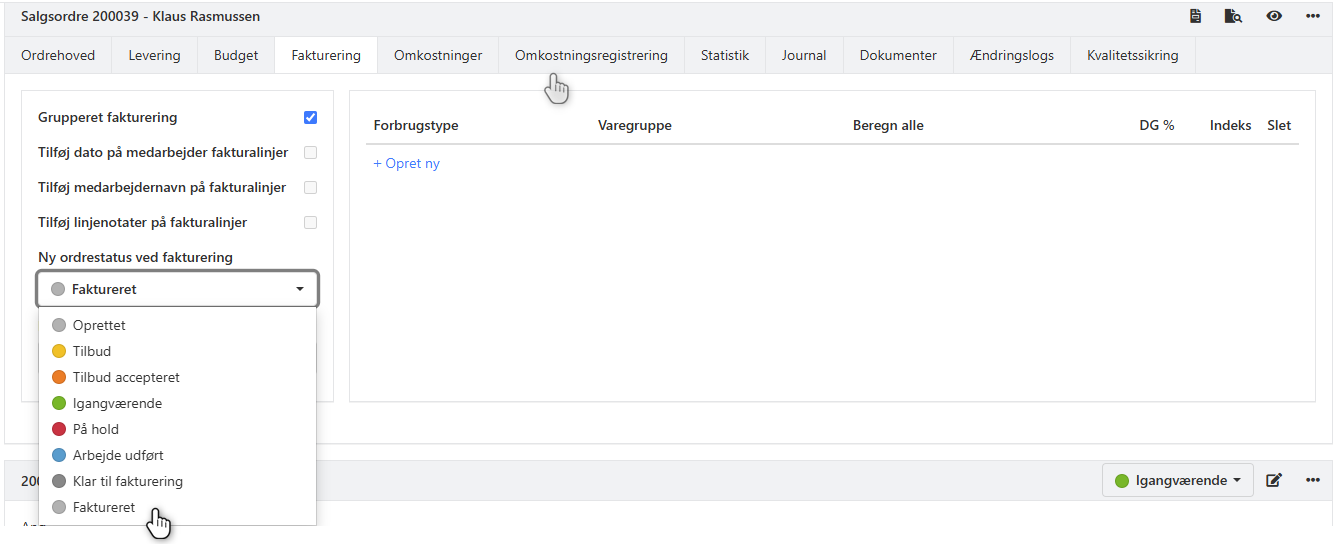
Extended budget
With the app, you can create a budget for each task on the order. This gives you more detailed order statistics, where you can follow the budget all the way down to task level.
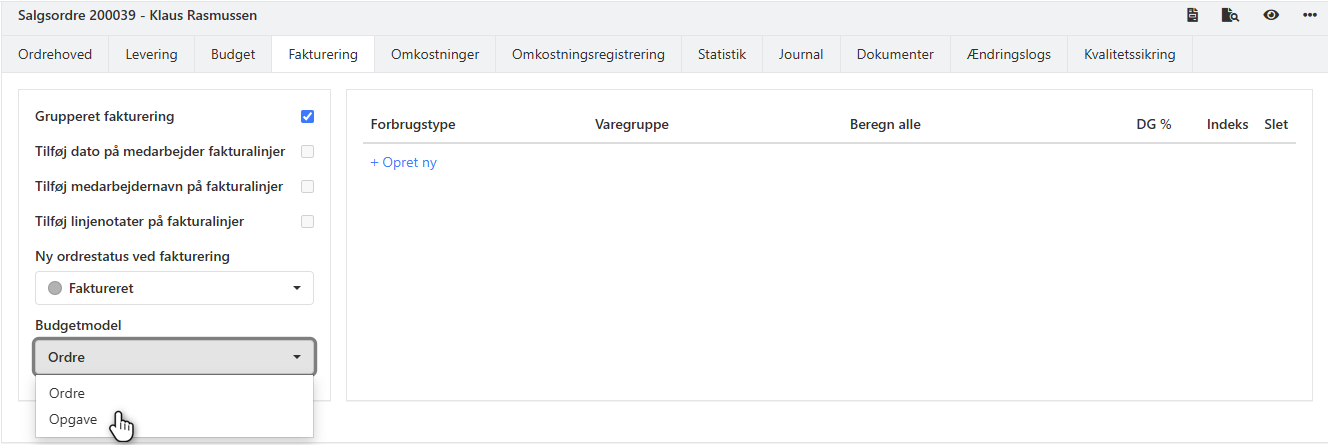
You choose how the budget should be used in the Budget model field on the Invoicing tab on the order. There are two options:
Order: The budget applies to the whole order. This is also how it works without the app.
Task: Each task has its own budget. You enter the budget on the Budget tab on the order.
When you select Task, the order statistics show a row with the budget under each task, and the difference between actual and budget is shown for each cost type. If costs or hours are higher than the budget, the figure is shown in red text.
- Updated