Archive
In the Archive, you can import master data from your previous accounting system, making it available in Xena.
This makes it easier to create customers, suppliers, and accounts in your new fiscal, as the imported data is used as suggestions.
You can find the Archive in the menu under Setup > Import/Export Data > Archive. The Archive does not affect your active fiscal, so you can work with the data without risk of changing anything in your bookkeeping.
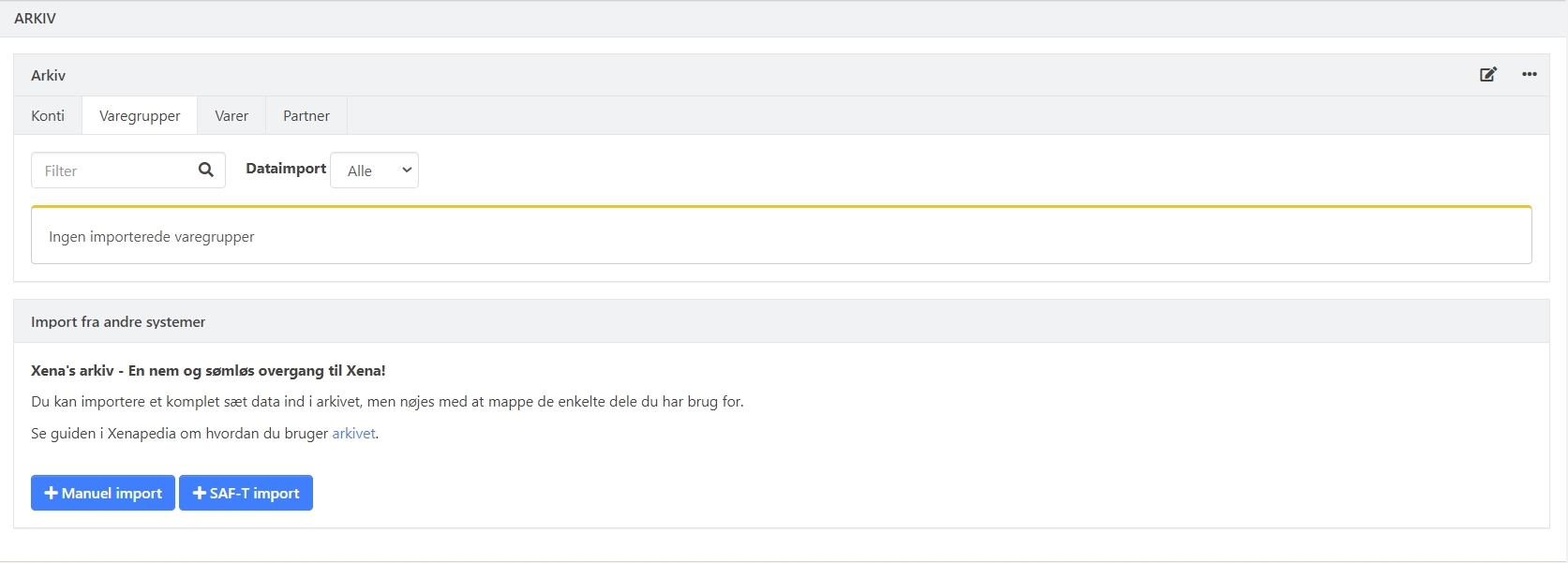
Manual import
Use the Manual import function to transfer data from a CSV file. If you have data in Excel, you must save the file as CSV. Please note that Excel can sometimes change the formatting of numbers and dates, so check thoroughly before importing.
You can import the following data:
Chart of accounts
Articles (if the article file contains article groups, these are created automatically)
Article groups
Customers
Suppliers
Note:
When importing the chart of accounts, you should avoid importing headings and sum accounts. Xena has fixed ledger groups, which are automatically assigned to the imported accounts
If you only want to import articles, you can choose to import them directly in Xena without using the Archive
➡️ Import of articlesFor customers and suppliers, it is recommended to import them in two separate processes to keep track of the data
How to import
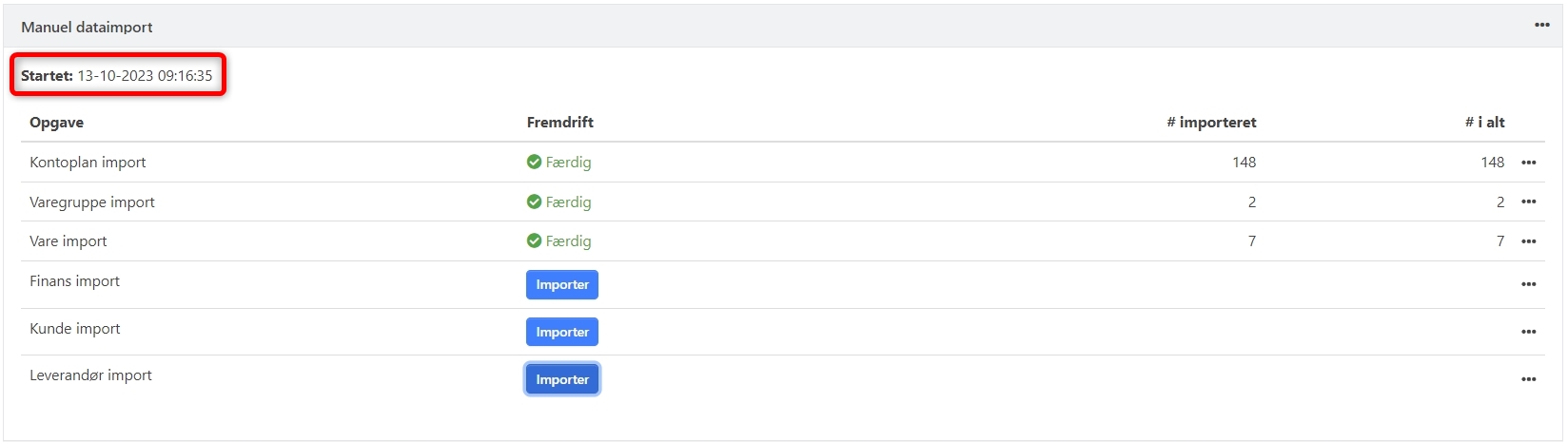
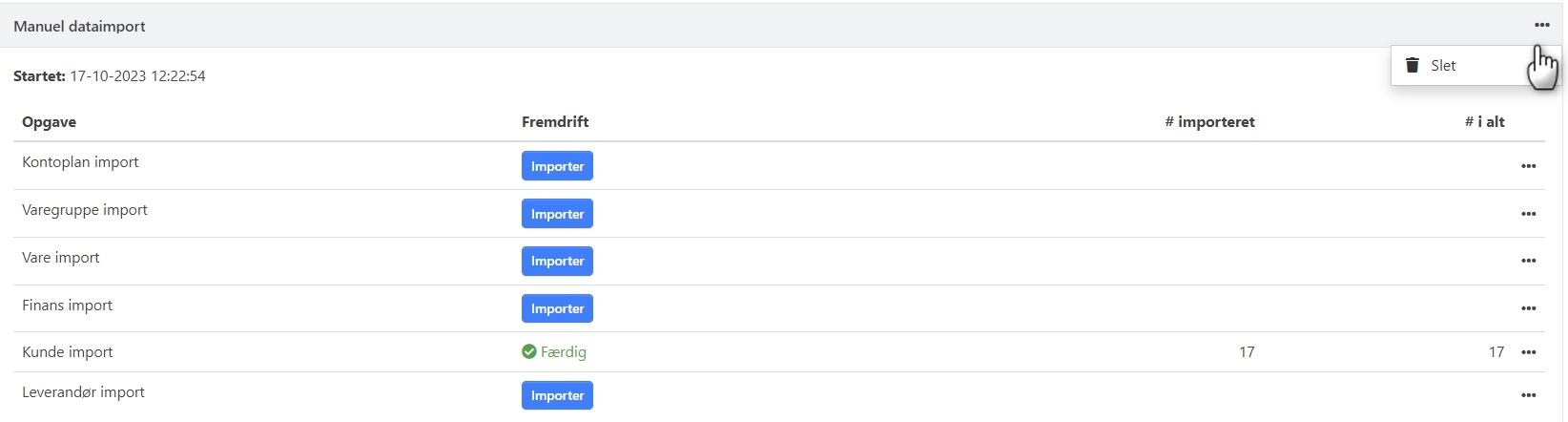
Create the import: Click Manual import. A box with a start date/time will be created
Select data: Click Import next to the data type you want to import
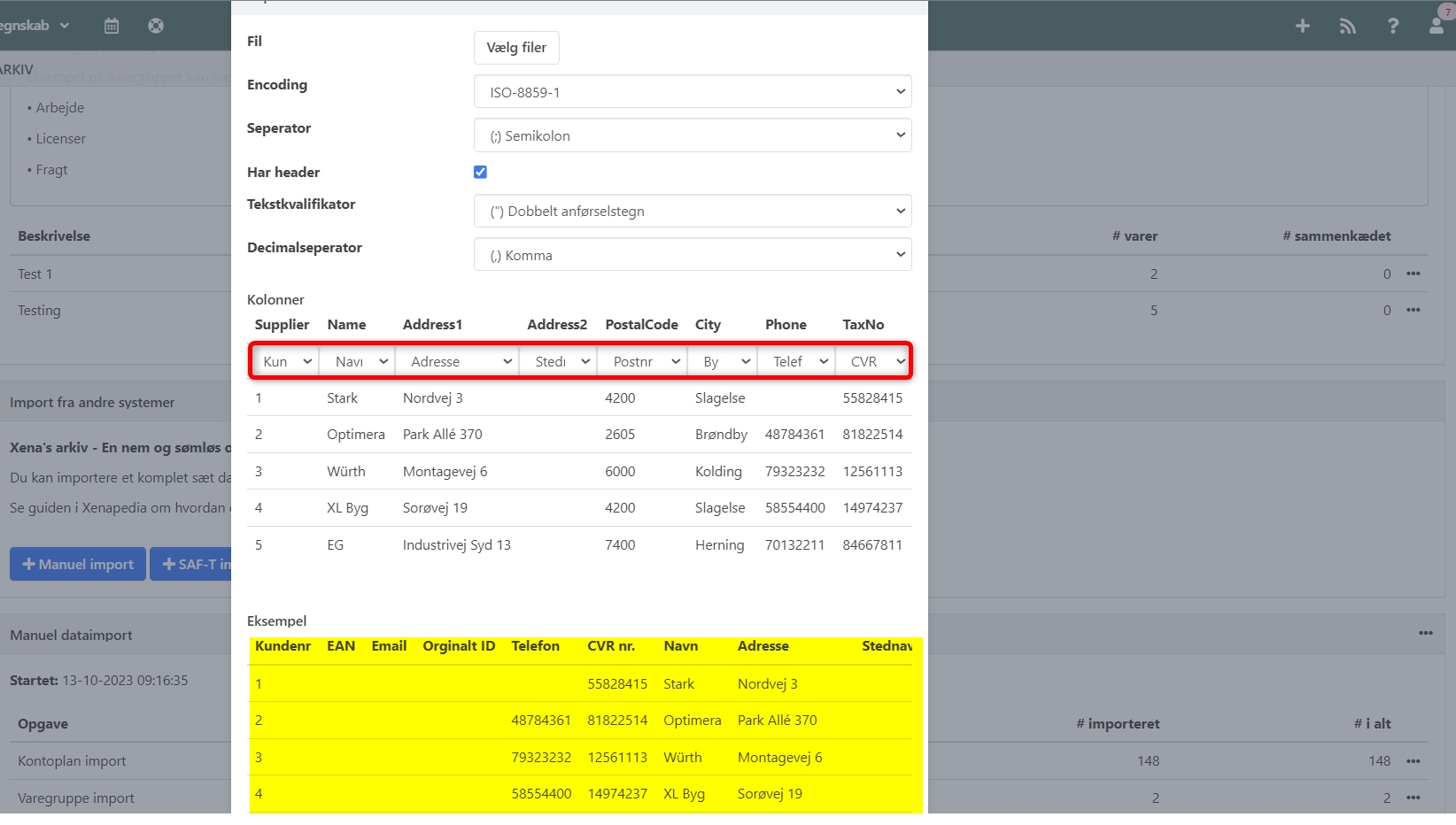
Select file: Select the CSV file you want to import. Also select format and any other relevant settings
Assign columns: Match the columns in your file with the relevant fields in Xena. Check the preview at the bottom to make sure everything is correct
Start import: If everything looks correct, click Start import
When the import is complete, the status will show Completed next to each of the imported data types in the list.
Import of SAF-T file
The SAF-T function allows import of data from a SAF-T XML file. This file contains master data and bookkeeping data. In the current version, only the data in the header is imported.

Using the imported data
All imported data is shown at the top of the Archive under the tabs Accounts, Article Groups, Articles, and Partner. For each tab, you can filter the data by the different import processes.
The Accounts tab
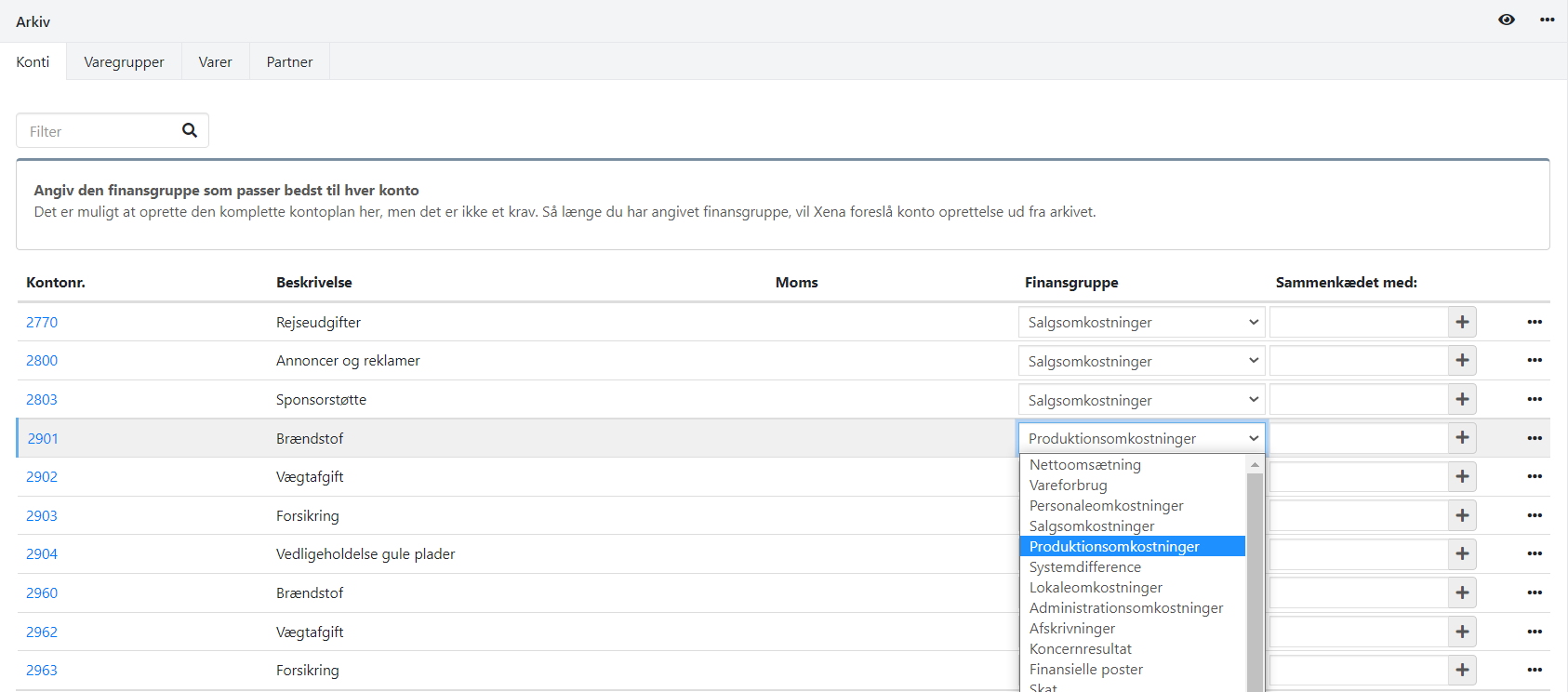
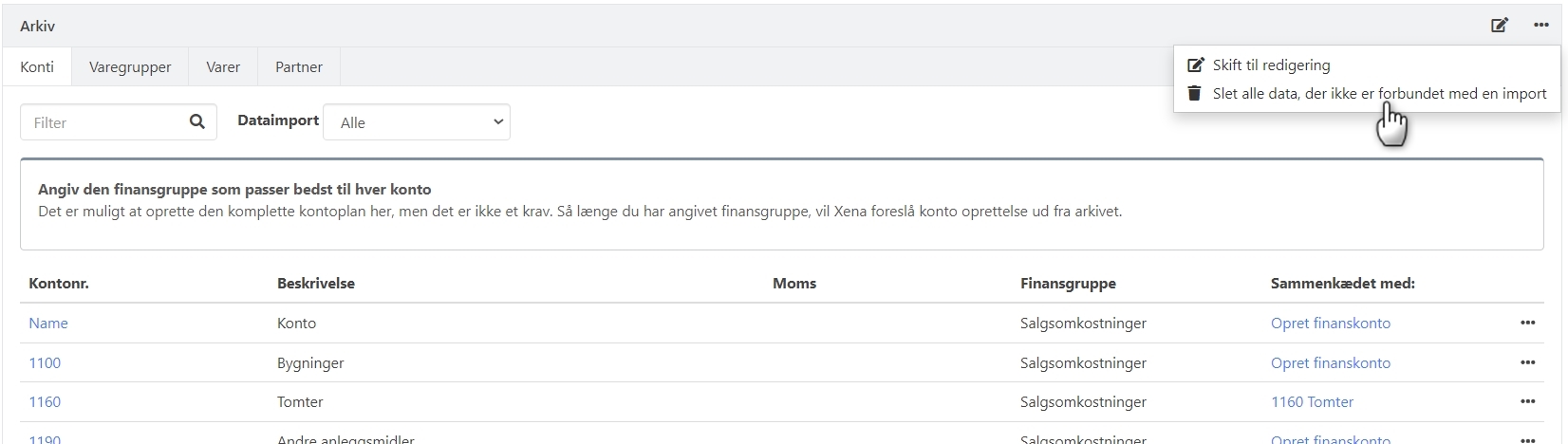
Here all imported ledger accounts are shown. To use the chart of accounts in the Archive as suggestions later, you must link each account to a ledger group.
➡️ Read more about the chart of accounts
Select Edit (click the pencil icon in the right corner)
Assign a ledger group for each account
Link the account to an existing account, or create a new ledger account via the + icon
Fill in the dialog with the necessary details — remember to select a VAT code if applicable
The Article Groups tab
Here you can create the desired article groups in your fiscal. Once the article group is created, you can create all associated articles in the group with a few clicks:
➡️ Read more about article groups
Click the menu (three dots) next to each group
Select Link all articles
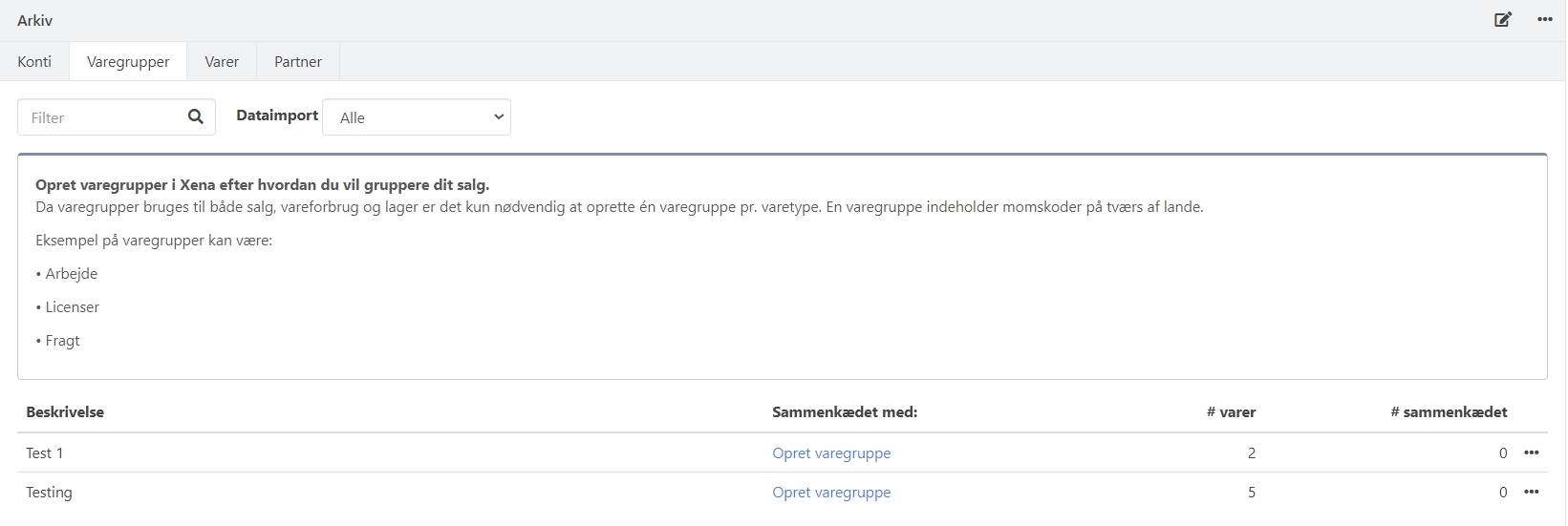
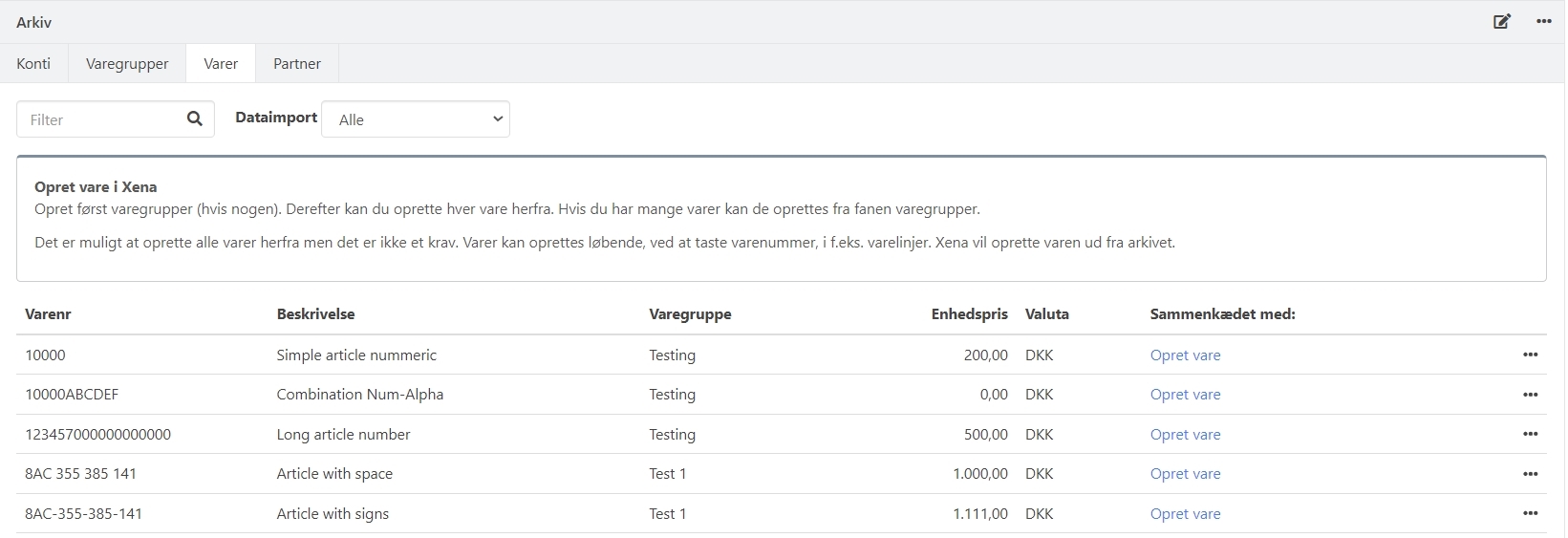
The Articles tab
Here you can create the imported articles one by one. If you have many articles, it is more efficient to create them via the Article Groups tab.
➡️ Read more about the article catalogue
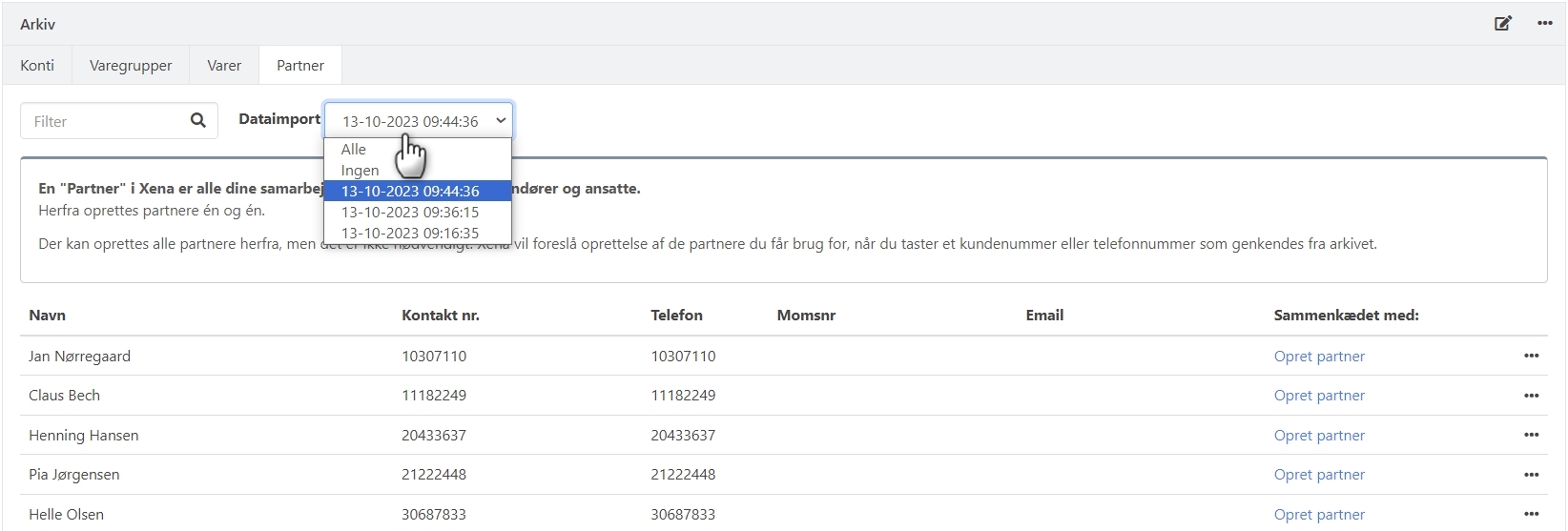
The Partner tab
Here you create customers and suppliers. Xena suggests creation based on data from the Archive, if recognised. For example, if you search for a previous customer number and it is recognised from the Archive, Xena will suggest creating the customer with the imported data.
If you have imported customers and suppliers in two separate processes, you can use the filter to distinguish between them.
➡️ Read more about partners
Deleting data in the Archive
Next to each imported data type, you can select Reset, which deletes the selected data type from the Archive.
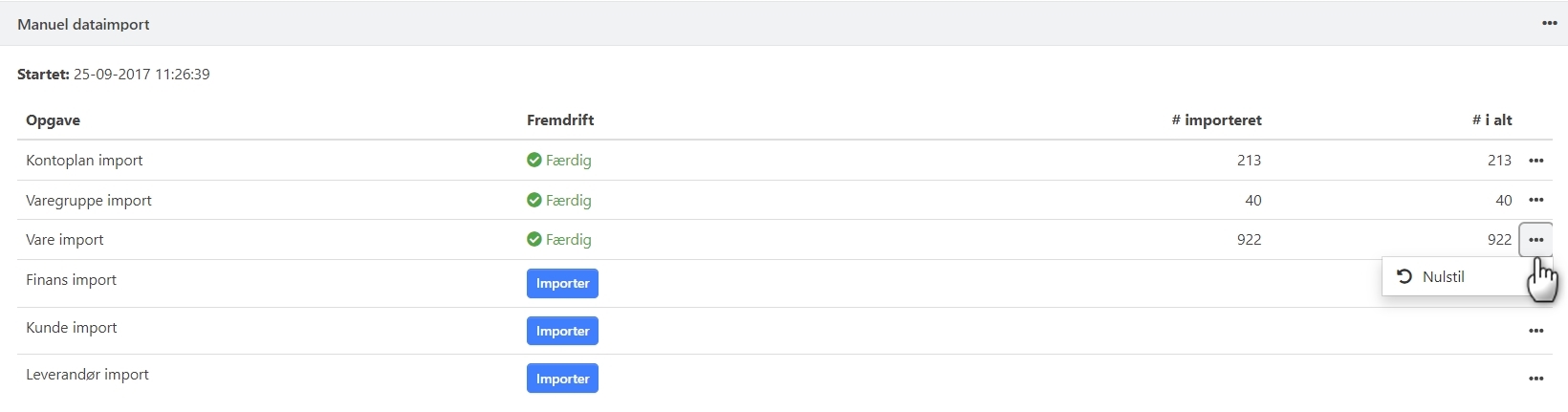
You can also choose to delete all imported data for a given import process. Click the menu at the top of the import box and select Delete. All data linked to this process will be deleted.
If you have data that is not linked to an import process (imported before October 2023), you can delete it via the menu in the top right corner of the screen.
- Updated