Search
Searching in Xena varies depending on where you are in the system. Here is an overview of the most important search methods.
General searching in catalogues
In Xena, you can search in the fields for selecting partners, articles, orders, etc. There are two main functions:
When you click in the field, a list of the 10 most recent catalogue entries you have opened is shown
When you start typing, the system automatically searches all entries and finds relevant information based on the catalogue's master data
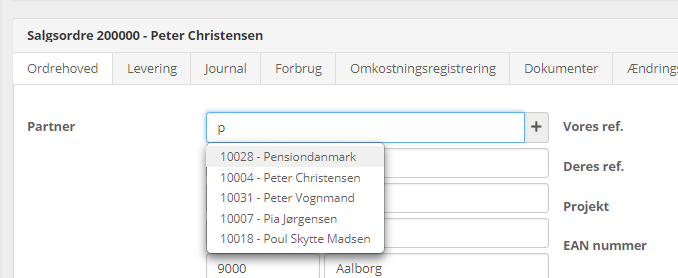
Searching for partners
If you want to find a customer, you can search on various details such as name, surname, city, or address — without having to enter a customer number.
The system searches for one word or the other. For example, if you search for "Mads" and "Odense", the search results will include both customers named Mads and those located in Odense.
Note: The more words you type, the more results you get. It is therefore recommended to search with as precise words as possible to get the best results.

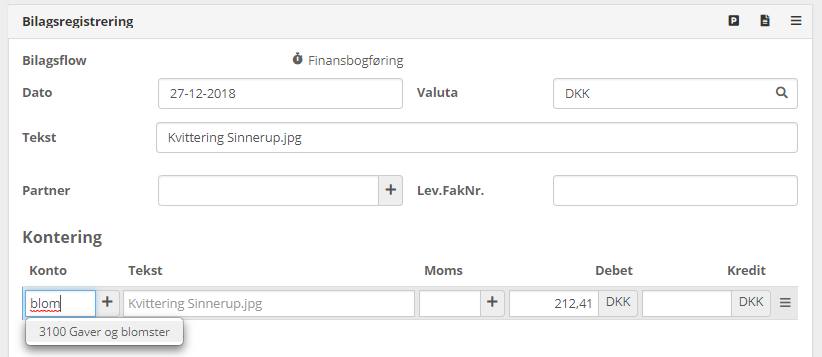
This search method is also used elsewhere in the system, e.g. when searching for an account number in voucher registration or the ledger.
If you want to find an account used for posting e.g. flowers and gifts, you can type "Flowers" in the account number field. If the account has not already been created, you can create a new one by clicking + next to the account number field.
Searching for articles
When searching for articles, either in the article overview or on order lines, the system searches both article number and article description.
You can search for whole words or parts of words
If you enter multiple search words, only articles where both words are present in either the article number or description are shown
Search results are sorted by relevance and creation date
Note: If you search for articles by article number, it is best to avoid spaces in the numbers, as this gives a more precise search.
Search example
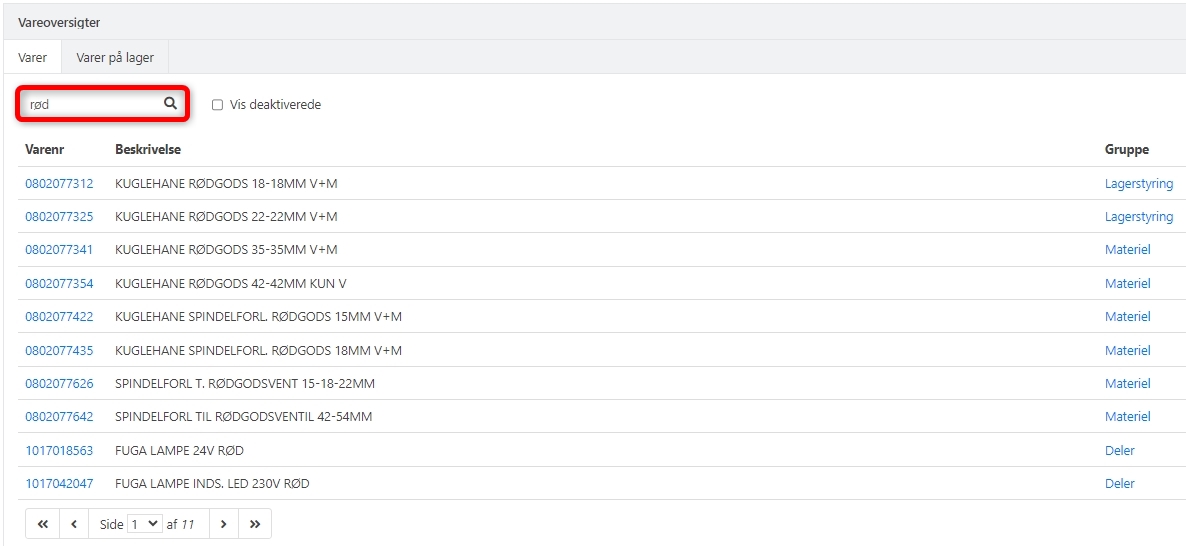
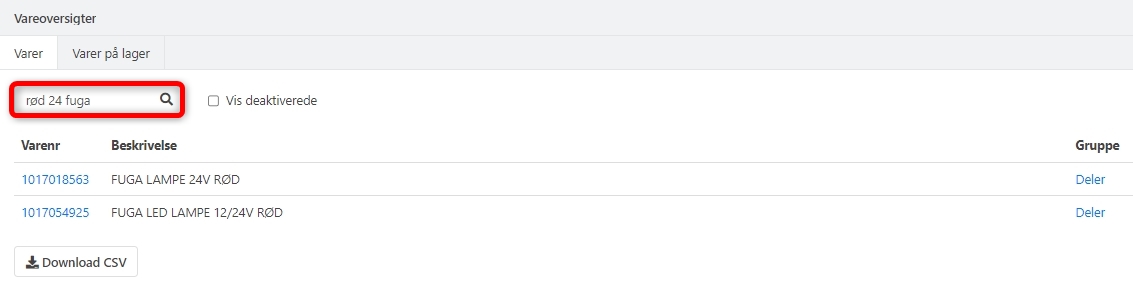
If you search for the word "rød" (red), you get all articles where "rød" appears in either the article number or description.
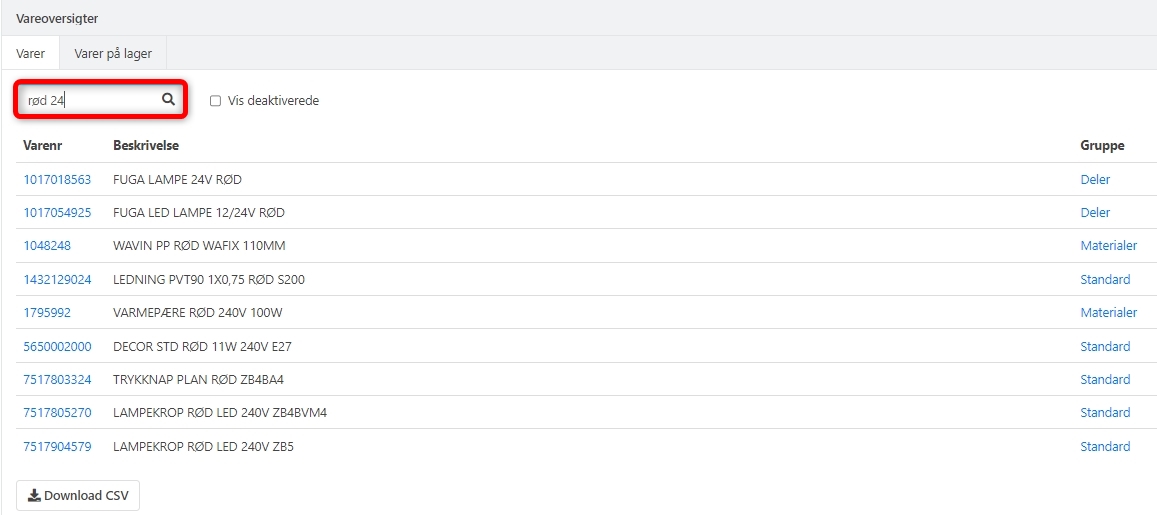
If you add "24" as a search word, you only get articles where both "rød" and "24" are present.
If you also search for "fuga", you only get articles where all three words are present.
Searching with special characters
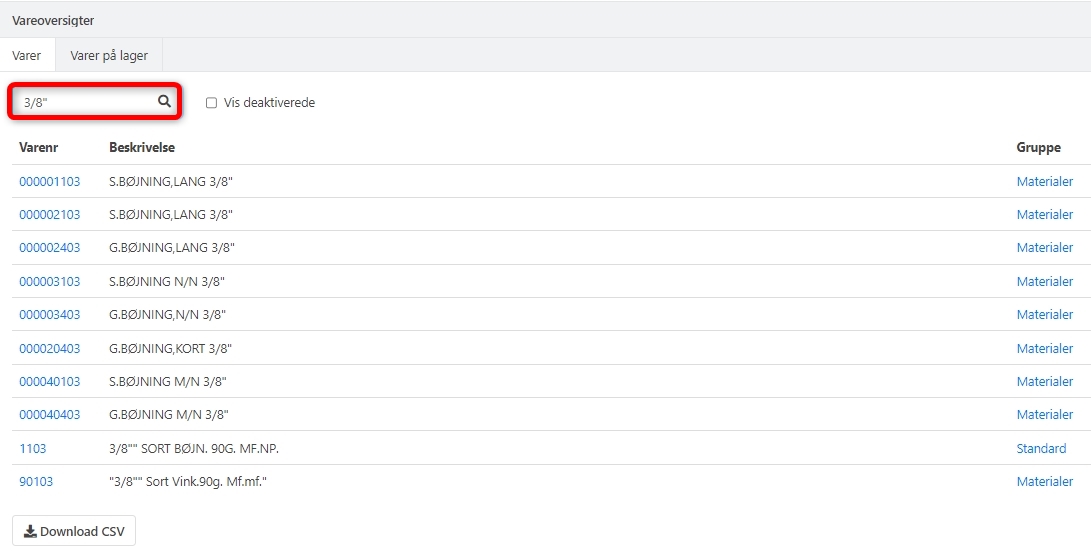
Xena supports a range of special characters such as +, -, &, |, !, (), {}, /, ^, :, [], ~ and . These can be used to refine your search.
To find all articles with the size 3/8", simply type 3/8" in the search field.
Searching with wildcards
You can also use the wildcard characters ? and * in your searches.
* replaces an unlimited number of characters
? replaces one character
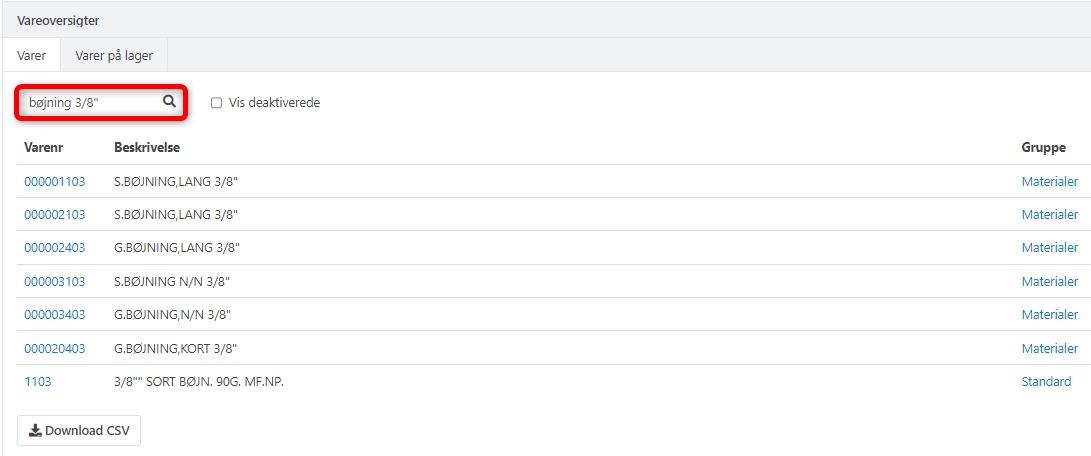
For example, if you search for "bøjning 3/8", you get all relevant articles.
By adding the wildcard character * in the middle of the word (e.g. "bøjn*ing 3/8"), you can get more results if there are articles containing extra characters in the middle of the word.
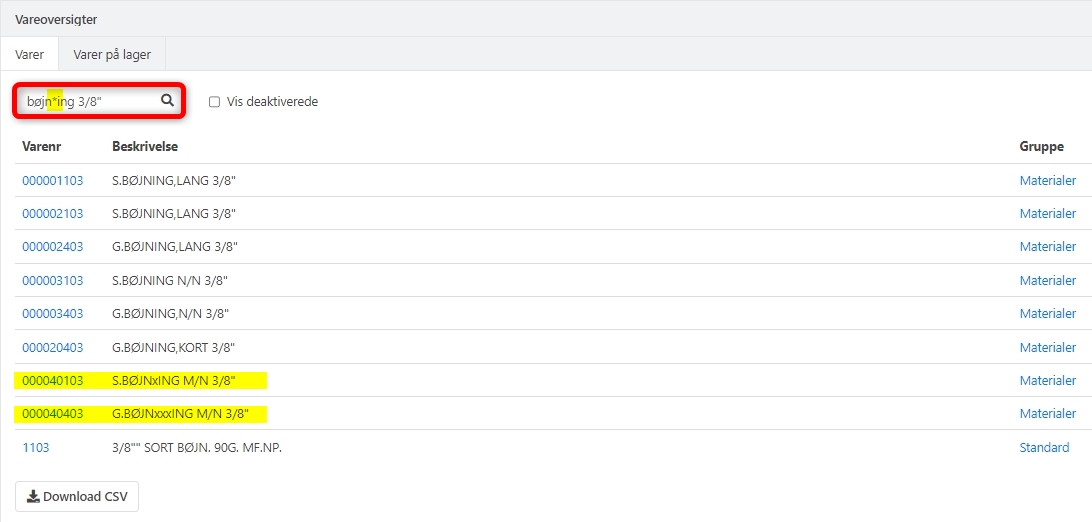
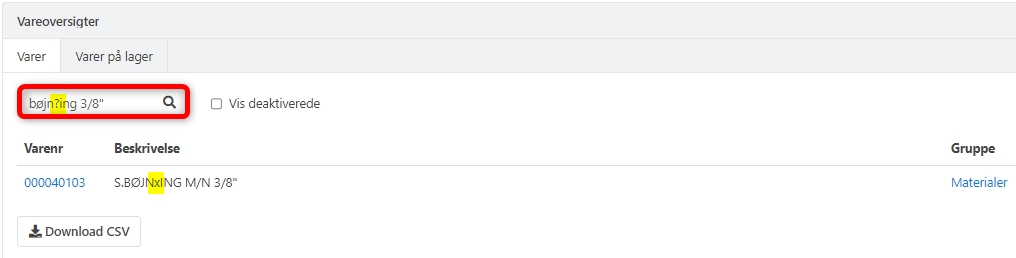
If you use the wildcard character ? (e.g. "bøjn?ing 3/8"), you only get a result if there is exactly one article with precisely one extra character.
Searching for orders
When searching in the order overviews, you can search for both whole words and parts of words. If you search for "omfug", both orders with that exact word and variants such as "omfugn" or "omfugning" will be shown.
When searching in the order catalogue, you can search on:
Order number
Address/delivery address/phone number
Our ref/Your ref
Internal order note
Task description (whole words only)
Project number/description
Partner number
Results are shown with the most recent order at the top.
- Updated