Partner reports
An overview of reports regarding partners.
Via the partner's account
From the partner, you have access to two reports:
Account statements
Postings
You can find them by clicking on the menu (three dots) in the Balance section at the top of the page.
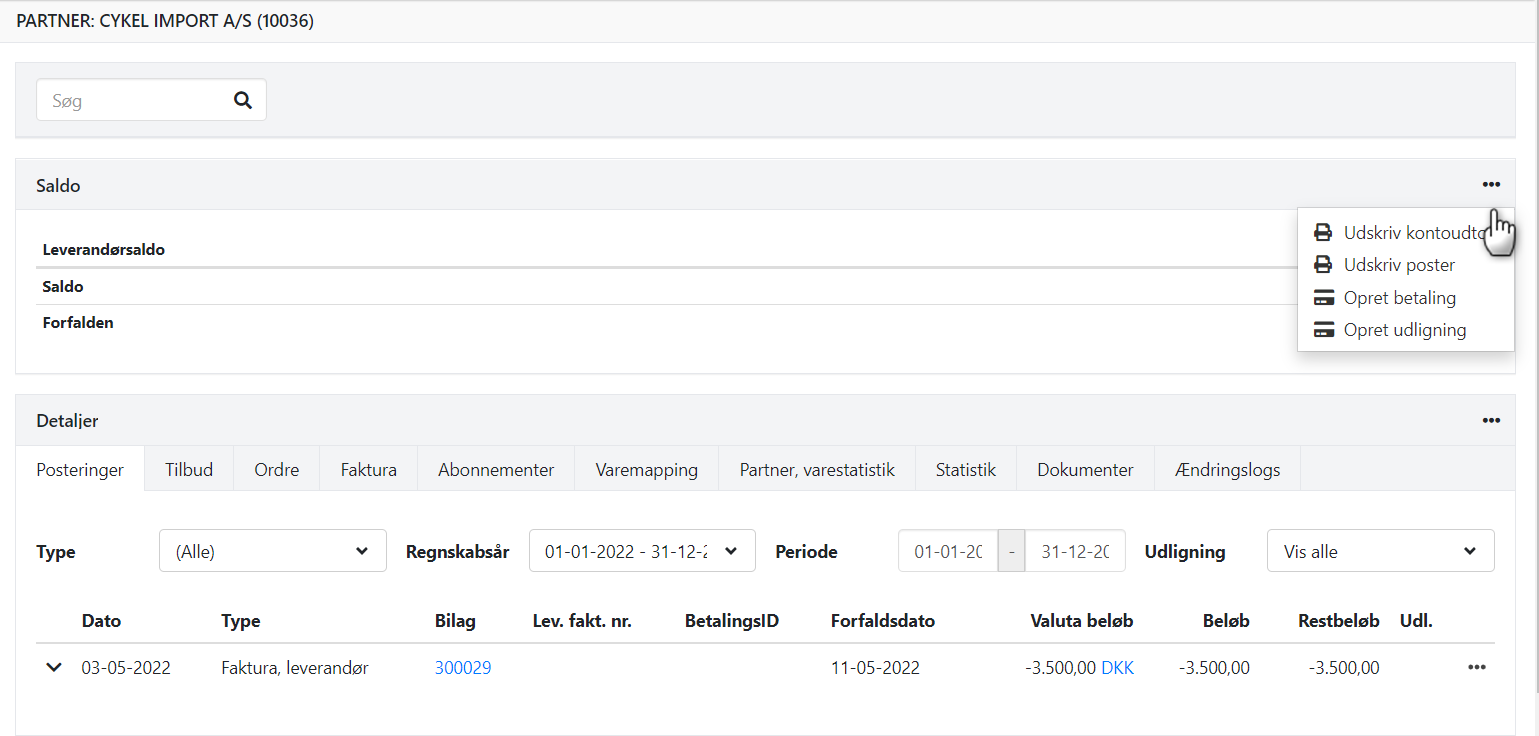
Both reports can be displayed in three ways:
All – with remaining balance: Shows all postings in the period with original amount, remaining balance and accumulated balance based on remaining balance
Open – with remaining balance: Shows only open postings in the period with original amount, remaining balance and accumulated balance based on remaining balance
All – with original amount: Shows all postings in the period with only the original amount and accumulated balance based on original amount
If you select Currency = Partner, amounts are printed in the partner's currency if the posting was recorded in that currency. Otherwise, the amount is printed in the accounting currency. The running balance is always printed in your accounting currency.
When you print or send an account statement via email, it is automatically saved on the partner under the Documents tab. If you send it to a registered email address on the partner, a log is also created.
➡️ Learn more about sent email status and logs
Note: You can customise the content of the email generated when sending account statements. Configure this under Setup > Order Setup > Email Setup.
Via the Reports menu
In the menu Sales/Purchase > Reports or Reports > Customers and Suppliers, you will find additional reports related to partners. All reports can be printed, downloaded, or sent via email using the Report button at the bottom of the report views.
Postings
This report shows postings recorded on a partner.
At the top, you can select balance type: Customer or Supplier
You can choose to view all postings or only open postings via the Settlement field at the top
If a posting in the selected period has been settled with a posting that has a posting date after the specified end date, the settlement is ignored. The posting is then shown as unsettled as of the specified date
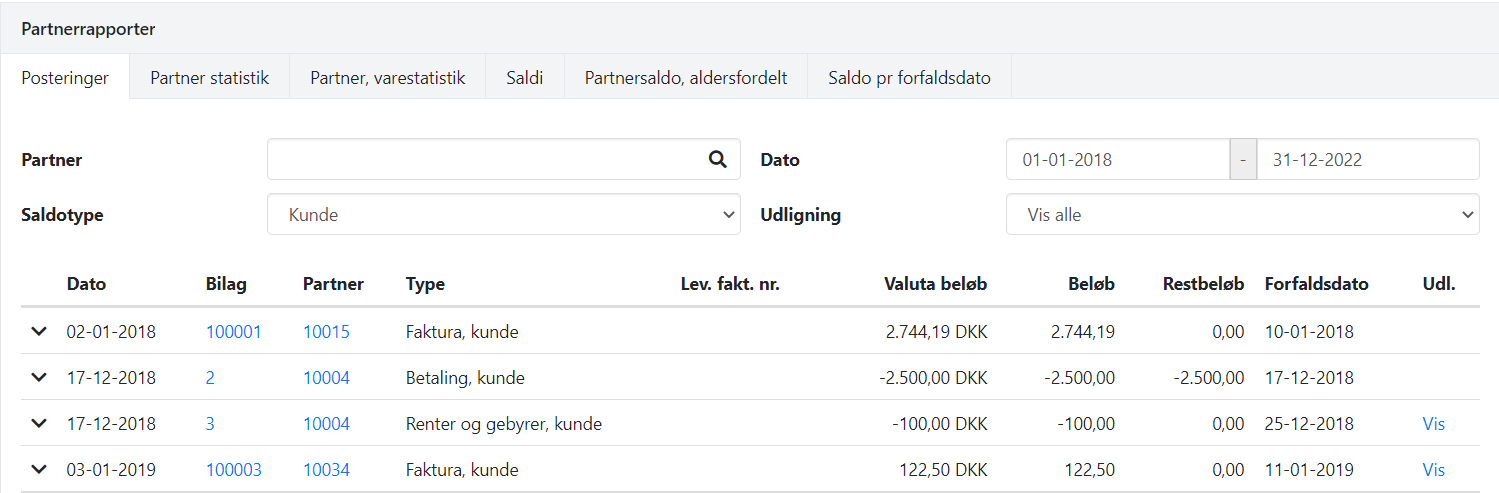
If a posting has been settled via a single settlement, you can see the settlement history by clicking Show next to the posting:
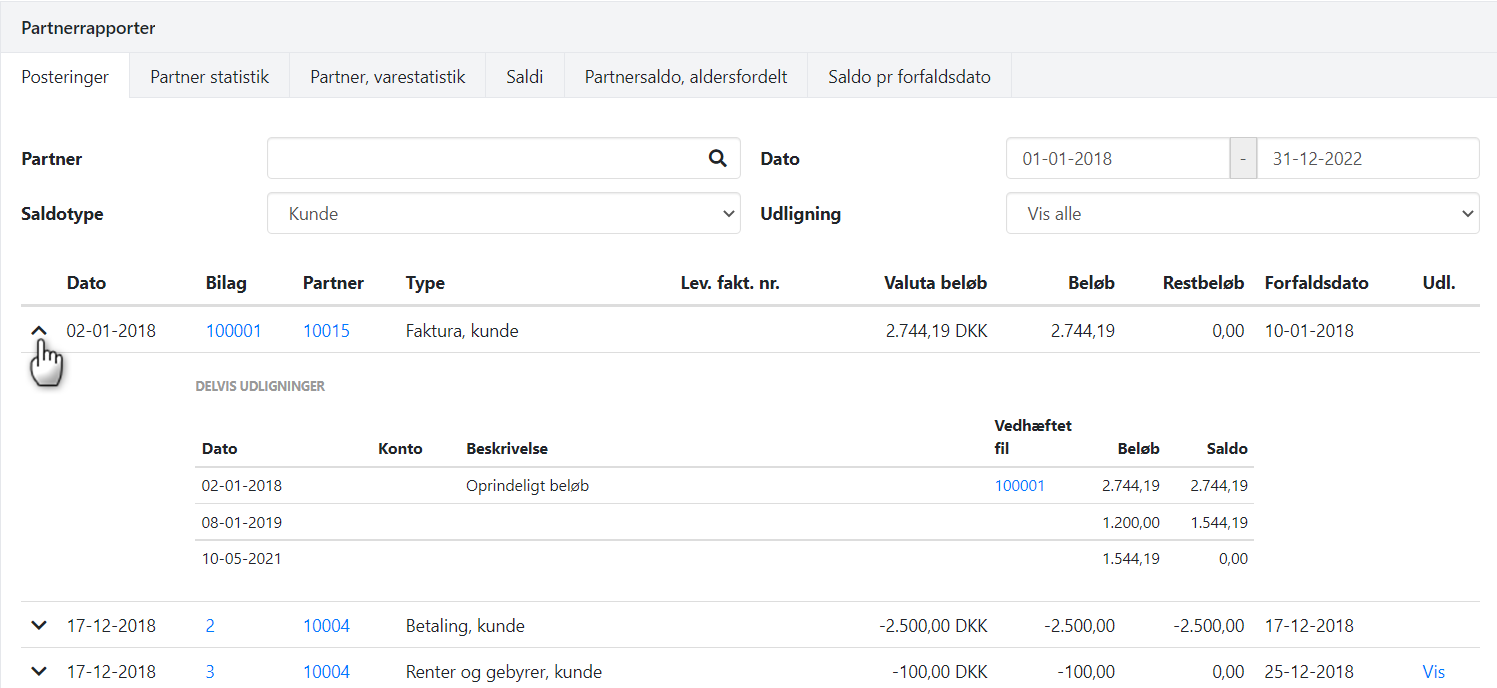
If a posting has been settled multiple times, you can see the settlement history by expanding the line:
Partner statistics
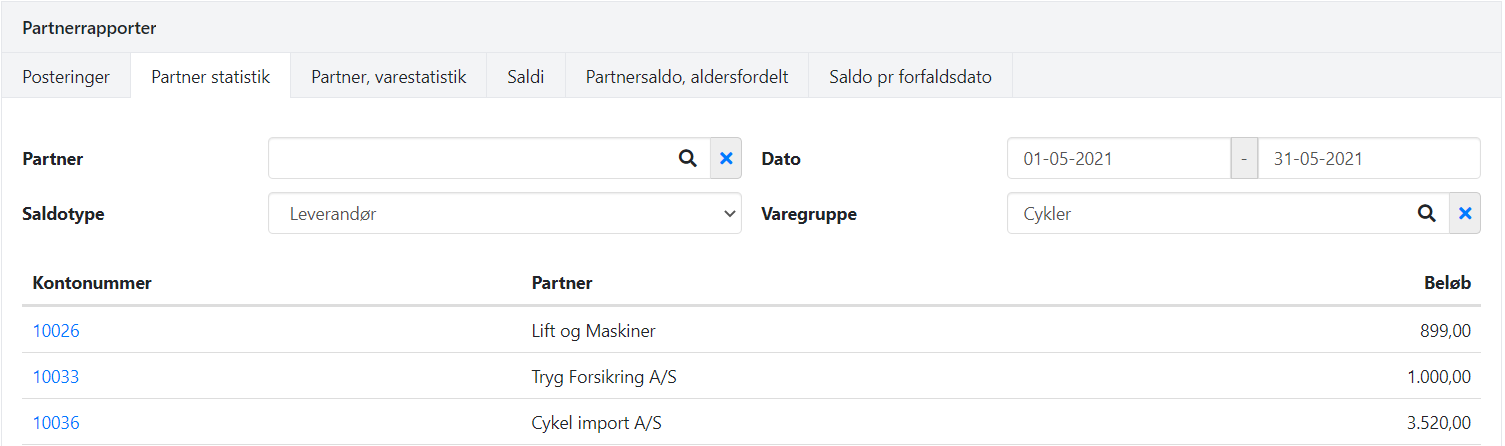
This report shows total purchase and sales statistics per partner for the selected period. At the top, you can select balance type: Customer or Supplier. You can also limit the report to a specific article group.
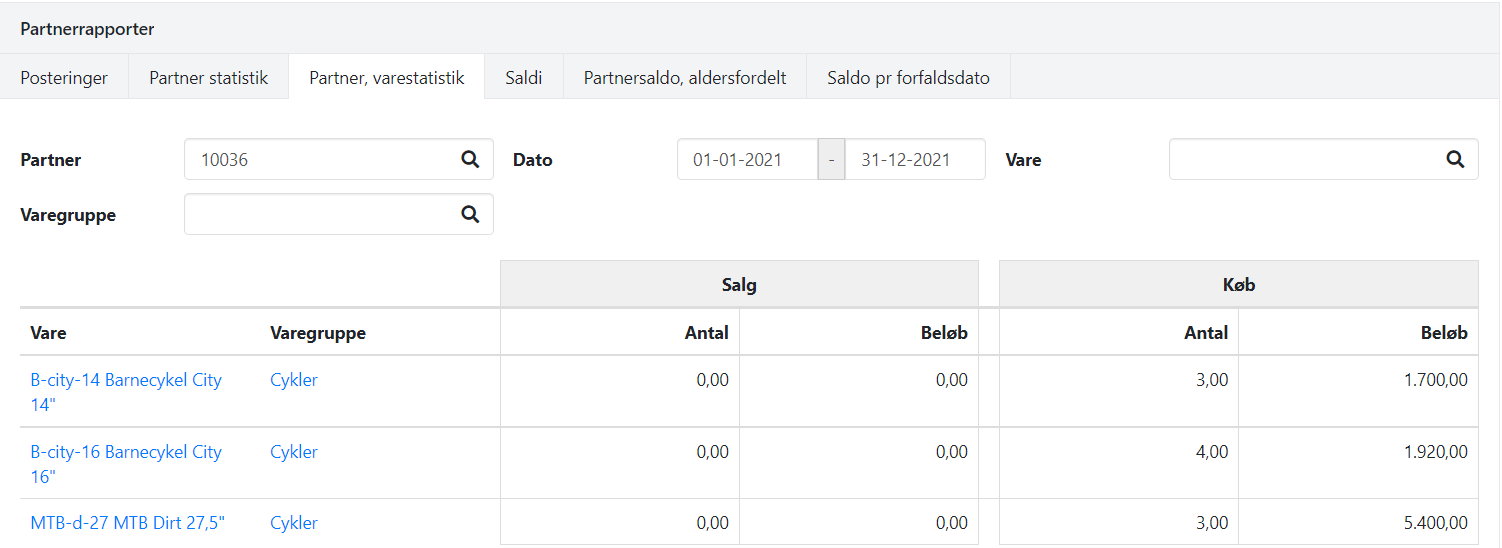
Partner, article statistics
This report shows purchases and sales by article number for the selected period. To generate the report, select the partner you want to see statistics for.
Balances
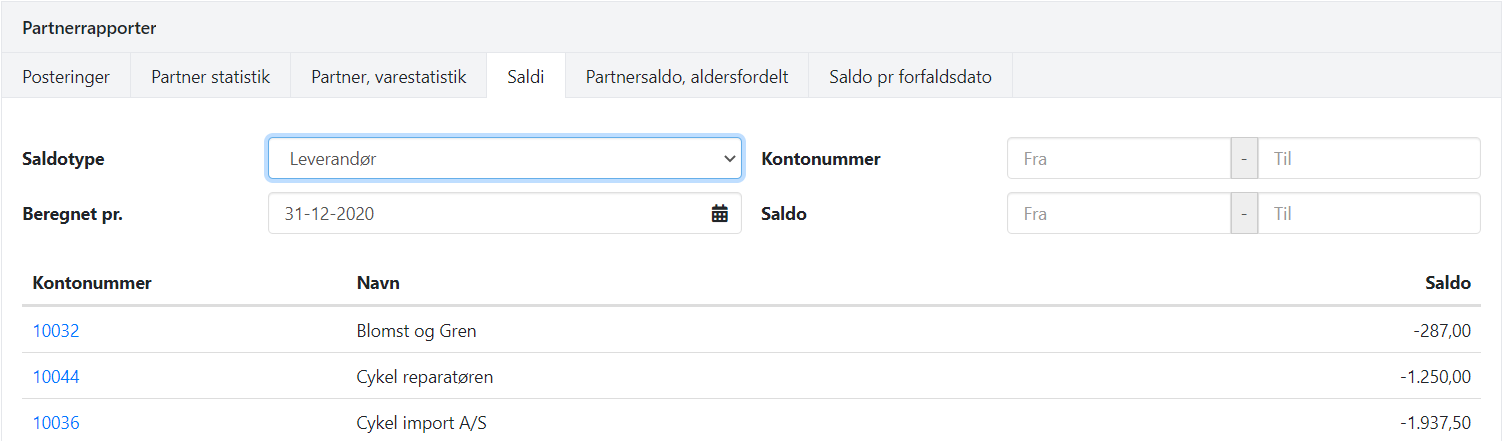
This report shows the balance per partner based on the date you enter in the Calculated on field. At the top, you can select balance type: Customer or Supplier.
Partner balance, age distribution
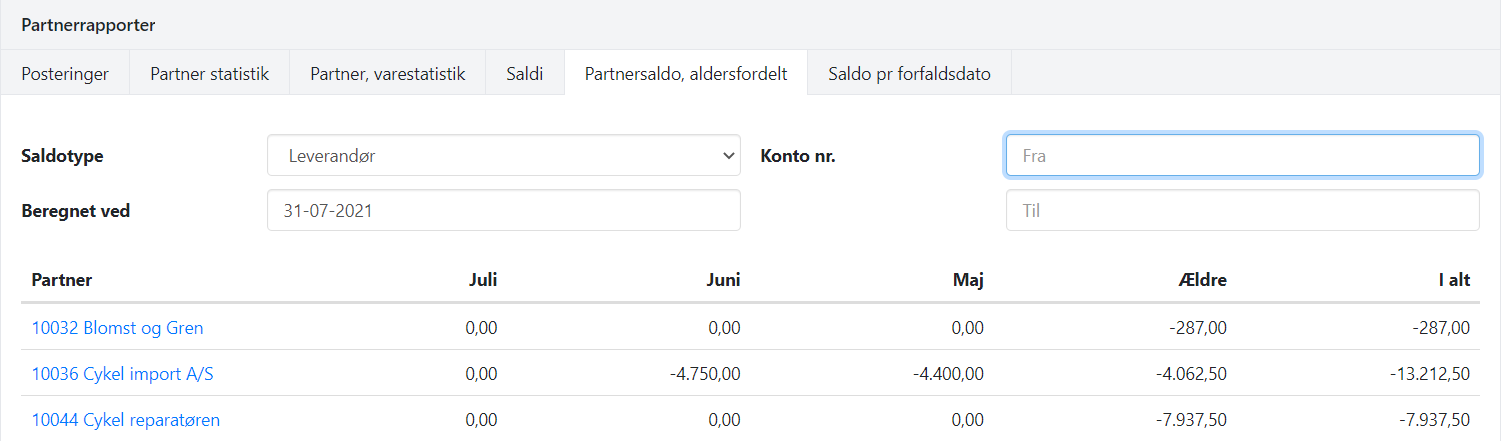
This report shows the monthly balance for each partner based on the date you enter in the Calculated at field. Only partners with a balance different from 0 on the specified date are shown.
At the top, you can select balance type: Customer or Supplier.
Note: The report does not take into account settlements made during posting of e.g. a payment. The displayed balances are calculated solely based on the posting date of the postings.
Balance by due date
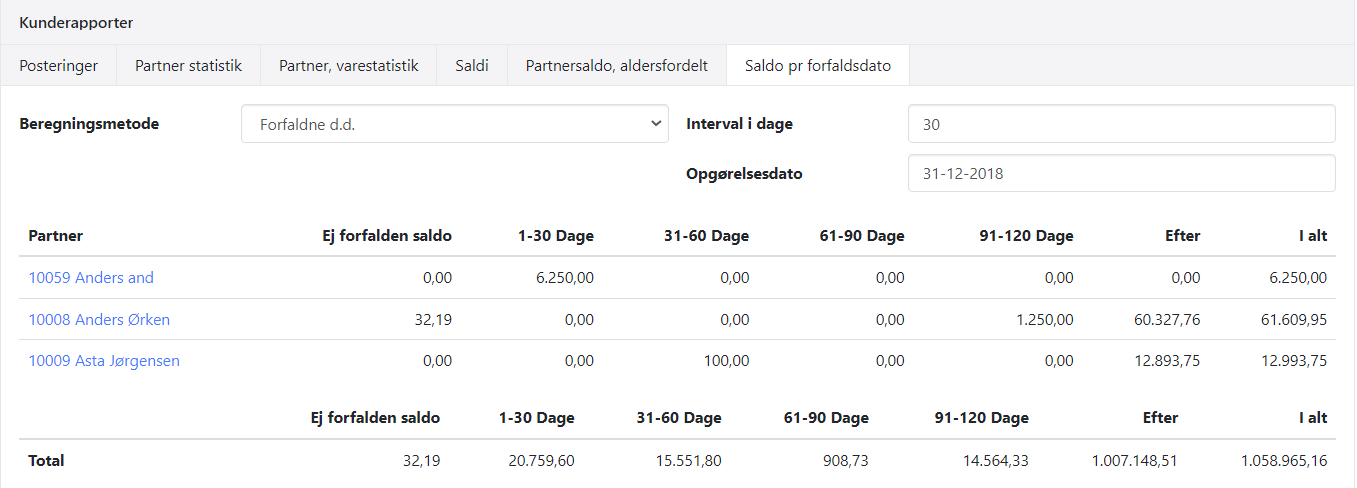
This report shows the distribution of postings by due date based on the entered statement date. At the top, you can select balance type: Customer or Supplier.
In the calculation method, you can choose:
Due today:
Distributes the past-due amounts across interval columns. Example with interval = 7 days and statement date = 24/3:
Not overdue = amounts with due date after 24/3
1–7 days = due date from 18/3 to 24/3
8–14 days = due date from 11/3 to 17/3
15–21 days = due date from 4/3 to 10/3
22–28 days = due date from 25/2 to 3/3
After = due date before 24/2
Due later:
Distributes the upcoming due amounts across interval columns. Example with interval = 7 days and statement date = 24/3:
Overdue = amounts with due date before 24/3
1–7 days = due date from 24/3 to 30/3
8–14 days = due date from 31/3 to 6/4
15–21 days = due date from 7/4 to 13/4
22–28 days = due date from 14/4 to 20/4
After = due date after 20/4
Invoice list
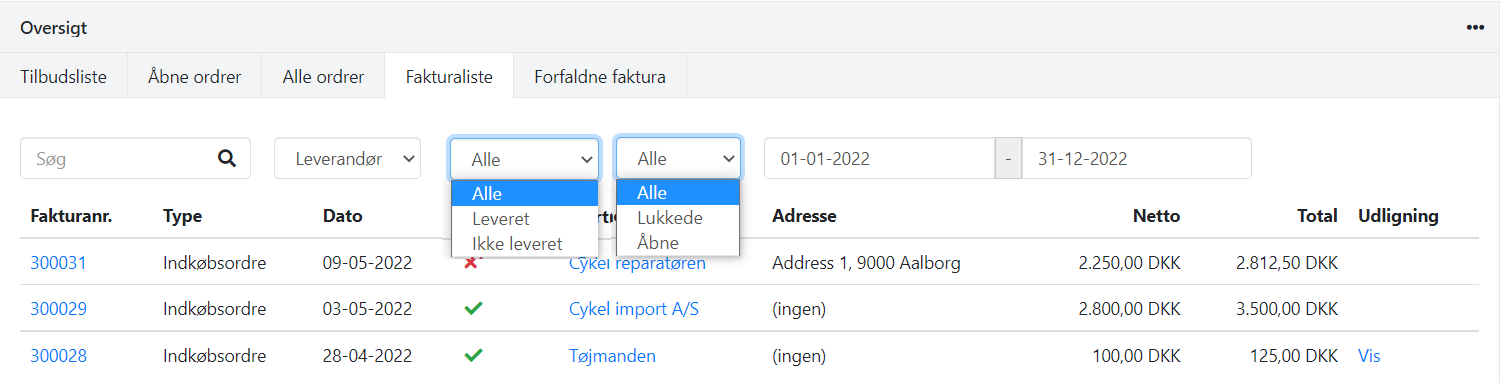
This report shows posted invoices for your customers or suppliers. You can find it under Sales/Purchase > Orders > Order Overview, tab Invoice List.
You can choose to view all invoices, only open or only closed invoices. You can also limit the view to invoices where the articles have been delivered or not delivered. This is useful if you use stock management and want to ensure that all purchase and sales invoices have also been posted as delivered.
If you download the report as a CSV file, the project number and project description appear as the last two columns in the file.
Overdue invoices
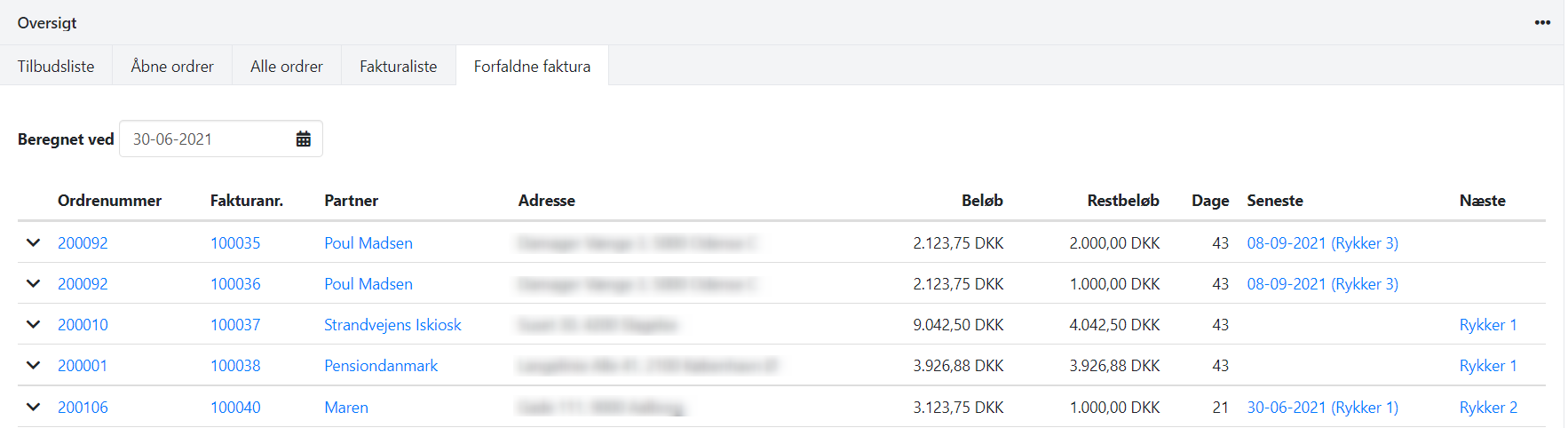
On the tab next to the invoice list, you will find an overview of overdue invoices. This is the same overview you see under Sales > Reminders > Reminder Overview.
- Updated